Dog of the Day: Poodle
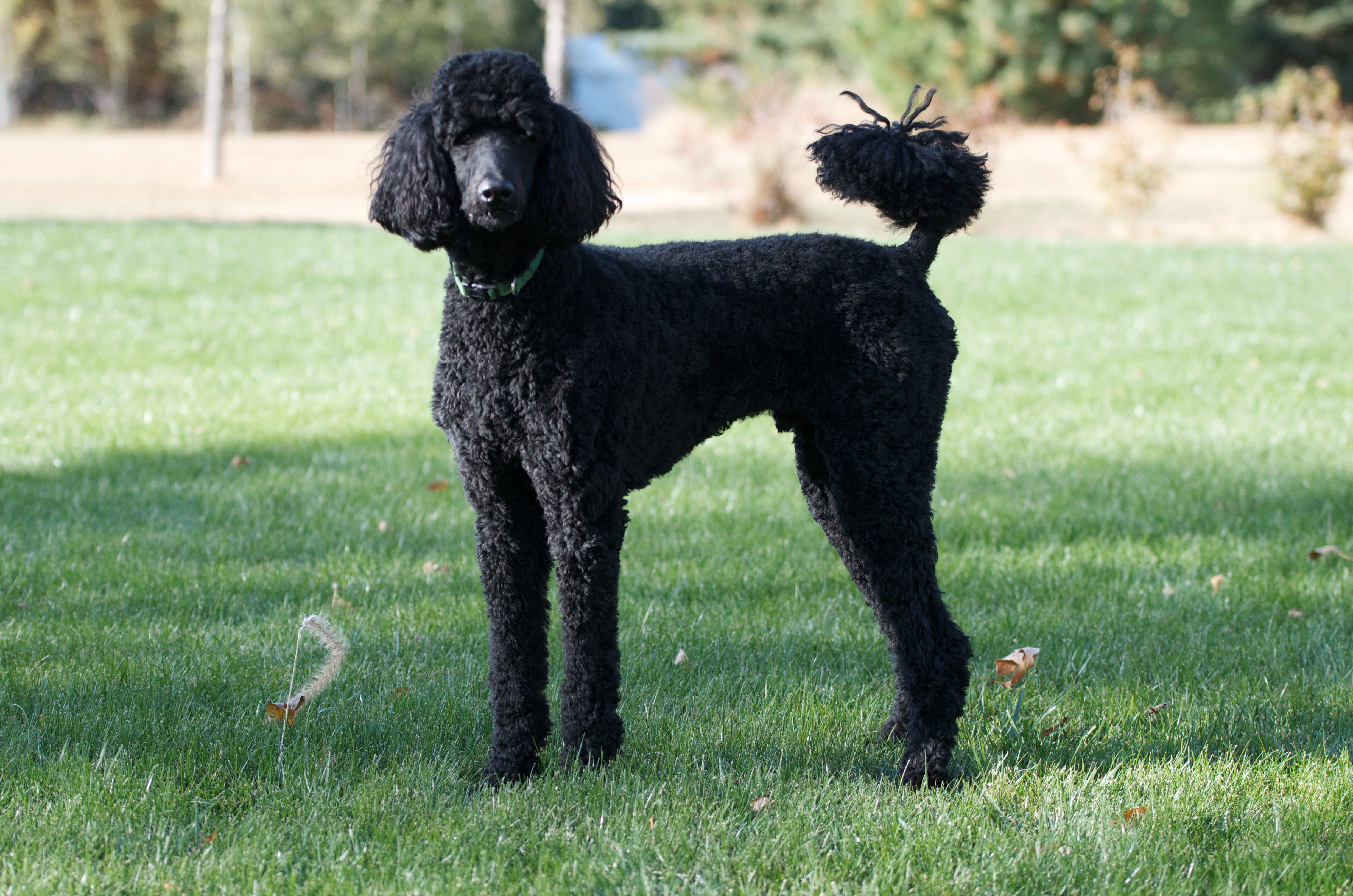
An athletic dog underneath the curls. Photo: Tim Wilson / Wikimedia Commons, CC BY 2.0. Unmodified.
A Poodle’s haircut attracts the attention. Its appetite for learning is what you live with. Today’s Dog of the Day is the Poodle: a bright, active companion whose three familiar varieties offer very different physical packages, but none offers a shortcut around training or coat care.
A Poodle can suit a household that enjoys daily activity, regular teaching, close companionship, and a dependable grooming routine. A Standard needs room for a larger athletic body; a Miniature offers a smaller companion without switching off the brain; a Toy needs especially thoughtful handling around children and bigger dogs. Individual temperament matters more than a promise attached to size or pedigree.
If you want a low-maintenance coat or a dog expected to entertain itself all day, reconsider the match before falling for the curls.
Poodle quick facts: Standard, Miniature, and Toy
The measurements below follow the Poodle Club of America’s US size definitions. Height is measured at the shoulder, not the top of the head. Other registries use different size divisions; these are not universal international cutoffs.
| Variety | Adult shoulder height in the US definition | Practical household consideration | | --- | --- | --- | | Standard | Over 15 inches | Larger stride, stronger adolescent dog, more physical space and coat to manage | | Miniature | Over 10 inches, up to and including 15 inches | Compact but active; still needs walks, learning, and grooming | | Toy | 10 inches or less | Small body requires gentle handling, safe play partners, and protection from accidental injury |
All three are Poodles, not separate personalities with guaranteed settings. The Standard category has no 15-inch upper limit: many adults are substantially taller. Height categories also do not tell you an individual dog’s healthy weight; ask a veterinarian about body condition rather than chasing a generic number.
Shared essentials: curly coat, regular clipping, active mind, daily opportunities to move and explore, and training that helps the dog participate comfortably in family life. “Teacup” is not a fourth variety in the US three-size system.
Which Poodle fits your household?
Standard: a larger companion with an athletic heritage
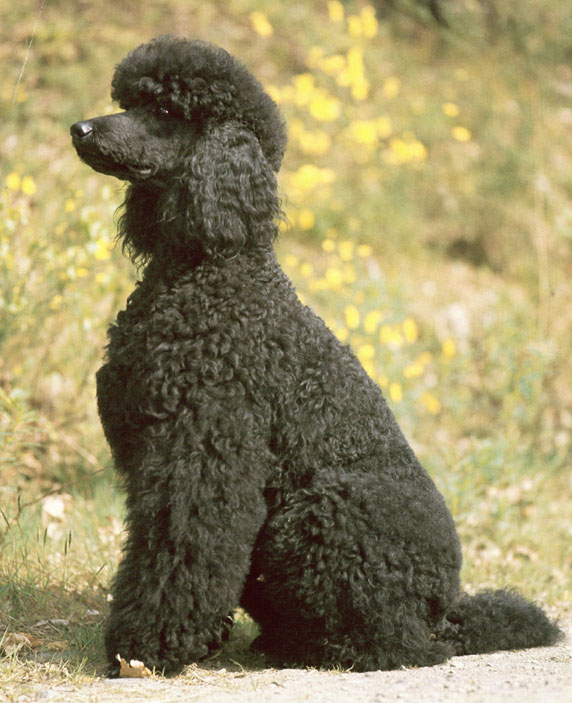
Standard Poodle portrait. Photo: B. Schöner / Wikimedia Commons, public domain. File used as supplied.
A Standard may suit someone who wants a bigger walking companion and enjoys teaching useful skills or exploring dog sports. Plan for the ordinary realities of a large adolescent: reaching counters, greeting people at speed, and taking up space in a car. Training calm greetings early is more useful than assuming intelligence will produce manners automatically.
A yard can help with supervised play, but it does not replace outings or interaction. Consider whether everyone who will walk the dog can safely manage its adult strength.
Miniature: less bulk, not less dog
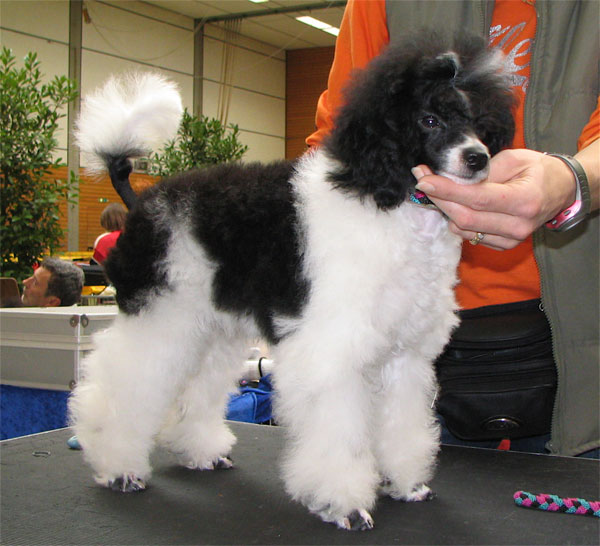
A smaller variety still brings a full grooming commitment. Photo: B. Schöner / Wikimedia Commons, public domain. Unmodified.
A Miniature can be a practical middle ground for a household that wants a smaller dog while still enjoying active walks, tricks, and training. Do not mistake portability for an ability to tolerate boredom. A dog that learns the name of a toy can also learn that barking makes somebody get up.
Apartment living can work when toileting access, exercise, enrichment, and noise management are realistic. Choose the individual dog’s temperament and needs, not a size label marketed as an automatic apartment solution.
Toy: small body, thoughtful setup
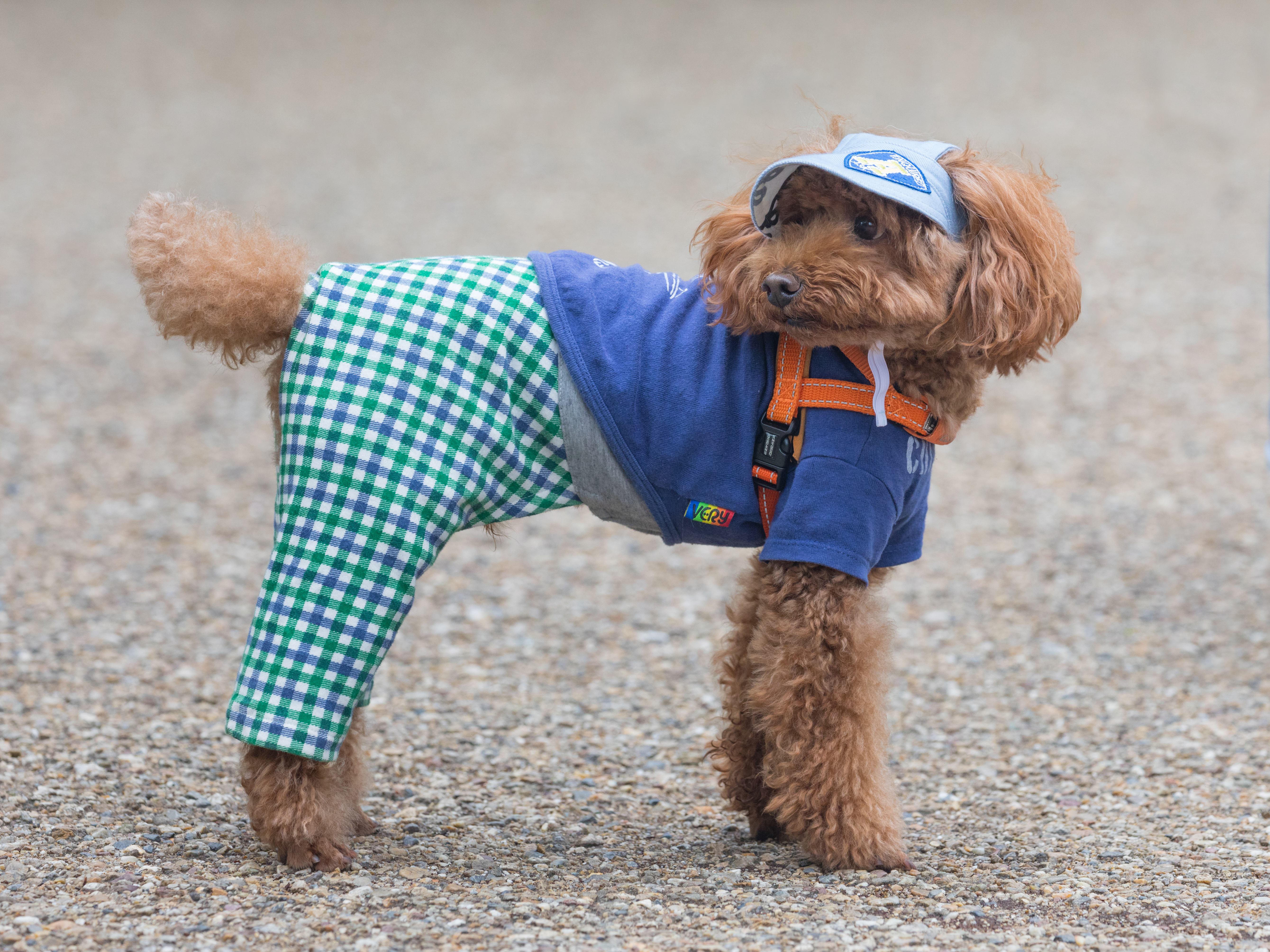
Toy Poodle in Tokyo; clothing is not a care requirement or recommendation. Photo: Basile Morin / Wikimedia Commons, CC BY-SA 4.0. Unmodified.
Toys still need walks and opportunities to sniff, learn, and play on the ground. Their small size makes rough handling, falls, and mismatched play with larger dogs especially important household considerations. Teach children to interact calmly at floor level rather than carrying the dog around.
A Toy is not automatically unsuitable for every family, nor is a Standard automatically safe with every child. Adults must supervise interactions and give the dog a quiet retreat. Our family-dog selection guide puts those everyday arrangements ahead of breed rankings.
Before the show ring: a water-retrieving dog
The Poodle’s history is rooted in water work, especially retrieving waterfowl. Its name is linked to the German word “pudeln,” associated with splashing. The breed is strongly associated with France, but early origins and the chronology of smaller varieties are less tidy than a single national label suggests.
The American Kennel Club’s history account connects the larger working Poodle with retrieving and describes the breed’s later roles in companionship, performance, and dog sports. The Poodle Club of America describes Miniatures and Toys as developed from larger Poodles. That shared ancestry does not make a Toy physically interchangeable with a Standard in cold water or heavy retrieving work.
Traditional coat trims are often explained through the needs of water work: less bulk in some areas, retained coat in others. Modern show grooming is a specialized presentation, not an obligation for a pet household. For the wider context, see why dogs were bred for jobs.
Water heritage is not a swimming qualification. Introduce water gradually, supervise closely, and never throw a dog in to make it learn.
Intelligence needs an outlet—and an off switch
The breed club describes Poodles as active and intelligent. In practical terms, expect to provide both movement and something worth thinking about. Learning quickly is helpful, but it includes learning habits you did not intend to teach.
Build a flexible day around sniffing walks, appropriate play, brief reward-based training, and genuine rest. A healthy adult Standard may enjoy longer outings than a Toy, but age, fitness, weather, and health matter more than a universal exercise quota. Puppies should not be pushed into adult endurance work. Ask your veterinarian about suitable activity if the dog is growing, older, or has health limitations.
Useful beginner projects include coming when called, walking on a loose leash, waiting briefly at doors, trading a toy, and settling on a mat. Reward the behavior you want while it is easy. Keep sessions short enough that both of you can succeed, and gradually add distractions.
Try a simple find-the-toy game or a food-search activity using part of the normal daily food allowance. Our enrichment ideas for smart dogs offer ways to vary the job without turning every evening into an obstacle-course production.
Owner reality: the dog may notice the smallest routine change before you do. That attentiveness can be delightful during training and inconvenient when your “one-time exception” becomes tomorrow’s expectation. Consistency matters more than elaborate commands.
The coat bargain: less loose hair, more maintenance
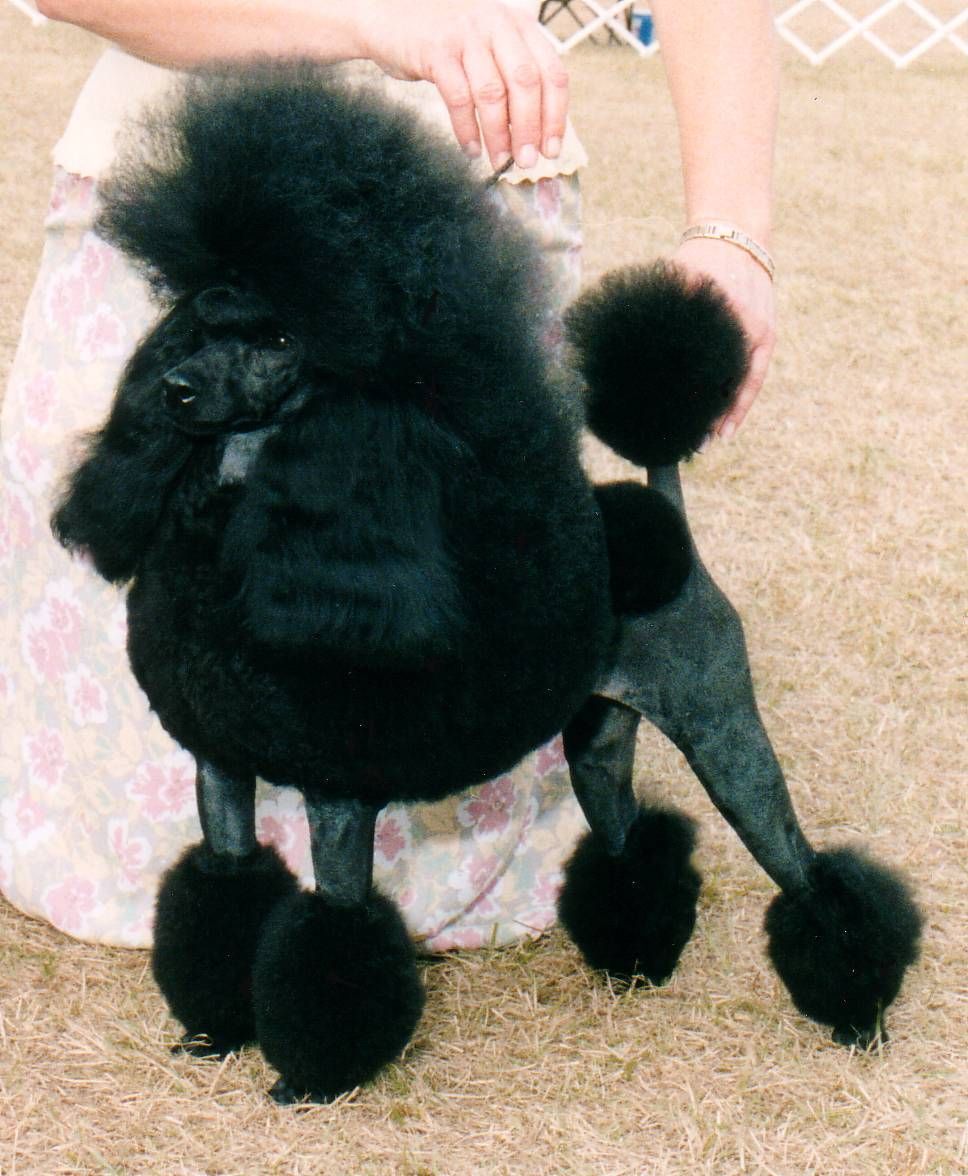
A show clip is one presentation, not the required pet haircut. Photo: Belinda Hankins Miller / Wikimedia Commons, CC BY 2.0. Unmodified.
Poodles generally leave less loose hair around the home than many heavy-shedding breeds, but shed hair can remain caught in the curly coat. Tangles do not disappear because the sofa looks clean. Low shedding is not low maintenance, and it is not a guarantee that someone with dog allergies can live comfortably with the dog.
Before bringing one home, agree on a realistic trim and maintenance plan with a groomer. The AKC’s Standard Poodle grooming guide describes trimming about every four to eight weeks. Use that as a planning range, with the interval adjusted to coat length, condition, and home care. A short practical trim often reduces work; it does not eliminate brushing, comb checks, nail care, or handling practice.
Check frequently behind the ears, in the armpits, around the collar or harness, and wherever hair rubs together. Ask a groomer to demonstrate working through the coat in small sections without scraping skin or pulling painfully. A brushed-looking surface can hide tangles underneath. Do not cut tight mats out with household scissors; skin can be caught inside them.
A longer style may need daily attention. Budget for both appointments and the time between them. Standards have more coat area to maintain; Toys are smaller but still need careful, patient handling. Our home grooming guide covers the routine, while the shedding guide explains why coat type changes the workload.
Start handling and household skills early
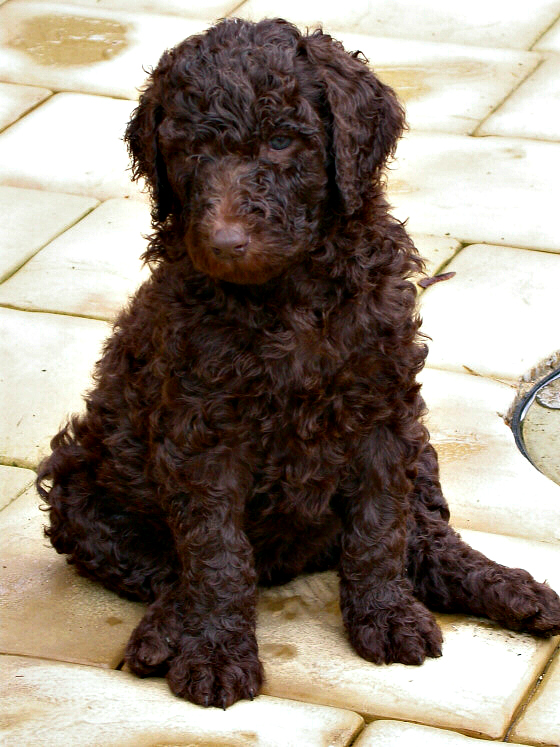
A young Standard Poodle, identified by the source as five weeks old—not a suggested homecoming age. Photo: Tufacave / Wikimedia Commons, CC BY-SA 3.0; source version adjusted by Frei sein, unchanged by Dogthread.
Teach comfortable handling in tiny steps: a brief touch of a paw, a reward, then a break. Introduce brushes and grooming sounds gradually rather than waiting for the first full appointment to discover that the dog is frightened. Stop and reassess if handling causes distress or apparent pain.
Give a new dog predictable toilet opportunities and teach short, comfortable periods apart without jumping straight to long absences. Build exposure to people, surfaces, sounds, and everyday situations at a pace the dog can cope with. Socialization means positive experience, not compulsory greetings with everybody.
Reward-based training is appropriate across all three varieties. A Toy deserves the same clear teaching as a Standard, not a life of being picked up whenever something gets difficult. For a puppy, use the early training schedule as a flexible starting point, alongside veterinary advice about safe exposure.
Health questions to take to your veterinarian
This is an owner-planning overview, not a diagnosis or a veterinary review. Ask about the individual dog’s history, examination findings, and care needs. Breed screening reduces uncertainty; it cannot guarantee lifelong health.
The Poodle Club of America’s health guidance separates breeding-dog screening by variety:
- Toy: ask about progressive retinal atrophy DNA testing, specialist eye examinations, and patellar evaluation.
- Miniature: ask about those eye and patellar checks plus hip evaluation.
- Standard: ask about hip and specialist eye evaluation, and the thyroid, sebaceous adenitis, and cardiac screening options in the club’s guidance.
These are discussion prompts, not an instruction to order the same tests for every pet. Ask a breeder for verifiable parent results rather than “vet checked” alone, and have a veterinarian help interpret what was tested and what remains unknown. A rescue may not have parental records; discuss the information available without treating missing paperwork as a diagnosis.
For Standards, ask specifically about gastric dilatation-volvulus, commonly called bloat, and whether preventive gastropexy merits discussion for your dog. Repeated unproductive retching, a swollen abdomen, severe restlessness, weakness, or collapse warrants emergency veterinary attention; do not wait for a home remedy to work.
Also discuss dental care, weight, mobility, and any changes in skin, appetite, thirst, or energy. The breed club describes additional concerns, including Addison’s disease and seizures, but a symptom list cannot identify their cause in your dog. New or persistent symptoms belong with a veterinarian, not a breed checklist.
FAQs
Are Poodles good family dogs?
They can be, when the household can meet their activity, training, grooming, and companionship needs. Assess the individual dog and supervise children. Toys need particular protection from rough handling; Standards need manners appropriate to their adult size.
What is the difference between Standard, Miniature, and Toy Poodles?
In the US definitions used here, Standards exceed 15 inches at the shoulder, Miniatures exceed 10 but do not exceed 15 inches, and Toys measure 10 inches or less. They share breed characteristics, but size changes handling, space, and physical activity considerations.
Do Poodles shed, and are they safe for people with allergies?
Poodles shed, although loose hair often stays in the coat instead of falling around the home. No breed offers an allergy-free guarantee. If allergies are a deciding factor, consult a clinician and spend time with the particular dog before committing; a brief visit cannot guarantee long-term tolerance.
How often does a Poodle need grooming?
Plan frequent home coat checks and regular clipping. Many pet dogs need grooming appointments roughly every four to eight weeks, but coat length and condition determine the actual schedule. Ask a groomer to show you the maintenance required for the chosen trim.
Can a Poodle live in an apartment?
Yes, an individual Poodle may do well in an apartment with reliable toilet access, exercise, enrichment, and companionship. A smaller variety takes up less space but is not automatically quiet or content with inactivity.
Are Poodles easy to train?
Their intelligence can make training rewarding, but it does not replace patient teaching. Use rewards, consistent cues, short sessions, and gradual practice around distractions. Seek qualified reward-based help for persistent difficulty, fear, or distress.
The bottom line
Choose a Poodle if you want a dog to do things with—and if coat care genuinely fits your calendar and budget. Choose the variety around physical fit, then choose the individual around temperament, health information, and the life you can actually provide. The haircut is optional. The daily commitment is not.
Editorial method: source-informed breed overview using Poodle Club of America guidance and the AKC history account, checked October 26, 2026. Dogthread has not performed hands-on breed testing or claimed veterinary, breeder, groomer, or trainer credentials. Grooming intervals are planning ranges, not individualized prescriptions; confirm health and care decisions with the relevant professional.